China


| This archive | |
|---|---|
| Archived items | 90 |
| As of | 2026-08-25 |
China as this archive records it. Every line in the reporting sections below is a headline that was collected, with its outlet and date. Nothing here is written by a model: if a claim appears, some outlet made it, and this page does not say whether it is true. The Background section is different in kind: those lines are encyclopedic facts from a reference work, each cited to the source it came from.
Most recent archived item: China’s ‘Three-Anti’ Legal Framework in Action - reported by The Diplomat
Most recent archived item: The Diplomat
This page lists 12 archived headlines published between 2026-02-27 and 2026-08-25. It reflects what these feeds reported in that window, not everything that happened.
Reporting by provenance
The tag records where a report came from, not who is fighting. A state outlet is named with its affiliation attached.
Other archived reporting
Items on this subject with no side recorded against them.
- [1] 2026-08-25 - The Diplomat: China’s ‘Three-Anti’ Legal Framework in Action
- [2] 2026-08-24 - Al Jazeera: Rain and flooding from Typhoon Narra hits China and Vietnam
- [3] 2026-08-22 - The War Zone: China’s Next Aircraft Carrier Is Taking Shape
- [4] 2026-08-21 - The War Zone: China’s Massive New Artificial Island In The South China Sea Emerges, Primed For Militarization
- [5] 2026-08-21 - The Diplomat: Ahead of Xi Visit, US Designates American Held in China as ‘Wrongfully Detained’
- [6] 2026-08-21 - The Diplomat: After 9 Years, China Is Reopening Its Borders To Recycled Plastic
- [7] 2026-08-20 - The War Zone: Our Best Look At China’s New Y-15 Turboprop Airlifter
- [8] 2026-08-20 - The Diplomat: China Praises Malaysian PM Anwar Ibrahim For Supportive Comments on Taiwan
- [9] 2026-08-01 - outlet not recorded: China helps Iran chip away at US air superiority despite Xi’s no-arms pledge
- [10] 2026-07-22 - outlet not recorded: There is no ‘Middle East.’ There’s a Levant America loves and a Gulf China needs
- [11] 2026-06-23 - outlet not recorded: Dispatch from Ukraine
- [12] 2026-06-08 - outlet not recorded: Show Us the Money
- ...and 78 more not listed here.
Background
Encyclopedic context, retrieved from a reference work and archived. It is not war reporting and is not counted as any.
History
China's historical civilization dates to at least the 13th century B.C., first under the Shang (to 1046 B.C.) and then the Zhou (1046-221 B.C.) dynasties. [13]
Evidence of early humans such as Homo erectus in China dates to the Paleolithic, around 1.7 million years ago, with unconfirmed sites as old as 2 million years ago. [14]
The imperial era of China began in 221 B.C. under the Qin Dynasty and lasted until the fall of the Qing Dynasty in 1912. [15]
Modern Homo sapiens are attested from around 50,000 years ago. [16]
During this period, China alternated between periods of unity and disunity under a succession of imperial dynasties. [17]
Following the end of the Last Glacial Period, in about 8,000 BCE, pottery-making Neolithic cultures emerged. By the 6000s BCE, sedentary agricultural societies had spread across the lower Yellow River basin. These societies became increasingly complex, urbanized, and stratified, but many experienced a population collapse in the late 2000s BCE for unclear reasons. After 2000 BCE, a Bronze Age culture emerged in the Central Plain, dubbed the Erlitou culture after its main site. Erlitou has been controversially identified with the Xia, the traditionally-accepted first dynasty, but no written records exist to confirm this. The Shang dynasty purportedly succeeded the Xia around 1600 BCE, with its early stages tentatively identified with an expansionist state known archaeologically as the Erligang culture. [18]
Leaders
Chief of state: President XI Jinping (since 14 March 2013) Head of government: Premier LI Qiang (since 11 March 2023) [19]
Geography
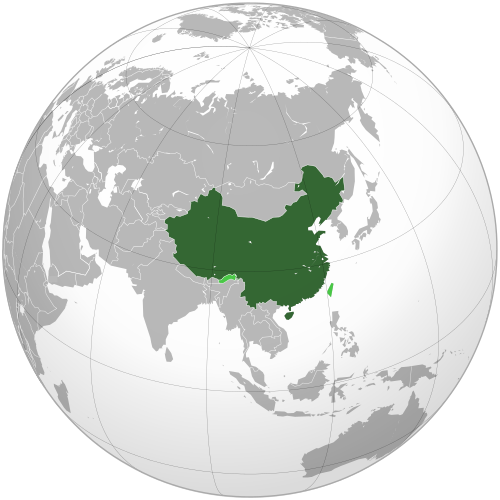
Location: Eastern Asia, bordering the East China Sea, Korea Bay, Yellow Sea, and South China Sea, between North Korea and Vietnam Area: 9,596,960 sq km Terrain: mostly mountains, high plateaus, deserts in west; plains, deltas, and hills in east Natural resources: coal, iron ore, helium, petroleum, natural gas, arsenic, bismuth, cobalt, cadmium, ferrosilicon, gallium, germanium, hafnium, indium, lithium, mercury, tantalum, tellurium, tin, titanium, tungsten, antimony, manganese, magnesium, molybdenum, selenium, strontium, vanadium, magnetite, aluminum, lead, zinc, rare earth elements, uranium, hydropower potential (world's largest), arable land [20]
Climate
Climate: extremely diverse; tropical in south to subarctic in north [21]
Culture
Beginning in the Qin and Han dynasties and continuing over the following millennia, an area of Chinese cultural influence grew to encompass much of East Asia. Japan, Korea, and Vietnam adopted various political, philosophical, religious, and aesthetic concepts from China, boosted by their adoption of Chinese characters and participation within the tributary system. China has 60 World Heritage Sites, including the Great Wall and Grand Canal, the second-most of any country (behind Italy). [22]
Ethnic groups: Han Chinese 91.1%, ethnic minorities 8.9% (includes Zhang, Hui, Manchu, Uighur, Miao, Yi, Tujia, Tibetan, Mongol, Dong, Buyei, Yao, Bai, Korean, Hani, Li, Kazakh, Dai, and other nationalities) (2021 est.) [23]
Chinese culture has historically emphasized family connections, with filial piety and the veneration of ancestors seen as vital duties under Confucian ethics. [24]
Languages: Standard Chinese or Mandarin (official; Putonghua, based on the Beijing dialect), Yue (Cantonese), Wu (Shanghainese), Minbei (Fuzhou), Minnan (Hokkien-Taiwanese), Xiang, Gan, Hakka dialects, minority languages; note - Zhuang is official in Guangxi Zhuang, Yue is official in Guangdong, Mongolian is official in Nei Mongol, Uyghur is official in Xinjiang Uygur, Kyrgyz is official in Xinjiang Uyghur, and Tibetan is official in Xizang (Tibet) [25]
Prior to the 20th century, family relations were highly patriarchal, and arranged marriages were commonplace. [26]
Religions: folk religion 21.9%, Buddhist 18.2%, Christian 5.1%, Muslim 1.8%, Hindu < 0.1%, Jewish < 0.1%, other 0.7% (includes Daoist (Taoist)), unaffiliated 52.1% (2021 est.) [27]
The CCP pushed for women's equality after coming to power, establishing the All-China Women's Federation to manage women's issues. However, many patriarchal gender norms remain prevalent, and women face lower employment rates and occupational gender segregation. Prior to the adoption of the Gregorian calendar in 1912, China traditionally used a 12-month lunisolar calendar. [28]
Government
Government type: communist party-led state Capital: Beijing Legal system: civil law influenced by Soviet and continental European civil law systems; legislature retains power to interpret statutes [29]
Demographics
Population: 1,407,181,209 (2025 est.) [30]
The 2020 Chinese census recorded the population as approximately 1,411,778,724. About 17.95% were 14 years old or younger, 63.35% were between 15 and 59, and 18.7% were over 60. [31]
Median age: 40.8 years (2025 est.) [32]
Between 2010 and 2020, the average population growth rate was 0.53%. [33]
Urbanization: 64.6% of total population (2023) Major urban areas: 29.211 million Shanghai, 21.766 million BEIJING (capital), 17.341 million Chongqing, 14.284 million Guangzhou, 14.239 million Tianjin, 13.073 million Shenzhen (2023) [34]
Since 2022, deaths have outpaced births. China has among the lowest total fertility rates (births per woman) in the world, around 1.0 as of 2025. [35]
Life expectancy: 78.7 years (2024 est.) [36]
China has a rapidly aging population: the proportion of Chinese over 65 is predicted to reach 26% by 2050, which would create a large economic and social burden from increased need for caretakers and medical assistance. [37]
Literacy: 96.7% (2020 est.) [38]
The National Bureau of Statistics estimated that the population fell 850,000 from 2021 to 2022, the first decline since 1961. In 2025, China recorded 7.92 million births, the lowest recorded birthrate since at least 1949. [39]
Military
Branches: People's Liberation Army (PLA): Ground Forces or People's Liberation Army Army (PLAA), Navy (PLAN, includes Marine Corps (PLANMC)), Air Force (PLAAF), Rocket Force (PLARF), Aerospace Force (ASF), Cyberspace Force (CSF), Information Support Force (ISF), Joint Logistics Support Force (JLSF); People's Armed Police (PAP, includes Coast Guard, Border Defense Force, Internal Security Forces); PLA Reserve Force (2025) Expenditures: 1.5% of GDP (2024 est.) Personnel: approximately 2 million active-duty PLA (950,000-1 million Ground; 250,000 Navy, including about 50,000 Marines; 350-400,000 Air Force; 120,000 Rocket Forces; 150-175,000 other forces) (2025) Equipment: the PLA is mostly equipped with domestically produced armaments with smaller amounts of imported weaponry, largely from Russia; China has one of the world's largest defense-industrial sectors and is capable of producing advanced weapons systems across all military domains (2025) [40]
See also: Timeline: China · Ukraine · Taiwan
Publication history
What changed and when. Computed from the sources each revision cited, not written by anyone.
- rev 1, 2026-08-25 — first published from 6 source(s)
- rev 2, 2026-08-25 — +9 source(s)
- rev 3, 2026-08-25 — rebuilt with no change of sources
- rev 4, 2026-08-26 — +1 source(s)
- rev 5, 2026-08-26 — rebuilt with no change of sources
- rev 6, 2026-08-26 — rebuilt with no change of sources
- rev 7, 2026-08-26 — rebuilt with no change of sources
- rev 8, 2026-08-26 — rebuilt with no change of sources
- rev 9, 2026-08-26 — rebuilt with no change of sources
- rev 10, 2026-08-26 — rebuilt with no change of sources
- rev 11, 2026-08-26 — rebuilt with no change of sources
- rev 12, 2026-08-26 — rebuilt with no change of sources
- rev 13, 2026-08-26 — rebuilt with no change of sources
Sources
Where a durable link was recorded, it is here. Google News items carry a redirect stub rather than an article and are listed above without one.
- [1] China’s ‘Three-Anti’ Legal Framework in Action - https://thediplomat.com/2026/08/chinas-three-anti-legal-framework-in-action/
- [2] Rain and flooding from Typhoon Narra hits China and Vietnam - https://archive.isnull.dev/archive/1787693124.228541/
- [3] China’s Next Aircraft Carrier Is Taking Shape - https://archive.isnull.dev/archive/1787695790.18543/
- [4] China’s Massive New Artificial Island In The South China Sea Emerges, Primed For Militarization - https://archive.isnull.dev/archive/1787688480.619058/
- [5] Ahead of Xi Visit, US Designates American Held in China as ‘Wrongfully Detained’ - https://archive.isnull.dev/archive/1787688480.619991/
- [6] After 9 Years, China Is Reopening Its Borders To Recycled Plastic - https://archive.isnull.dev/archive/1787689305.502553/
- [7] Our Best Look At China’s New Y-15 Turboprop Airlifter - https://archive.isnull.dev/archive/1787695790.185217/
- [8] China Praises Malaysian PM Anwar Ibrahim For Supportive Comments on Taiwan - https://archive.isnull.dev/archive/1787691299.924407/
- [13] Background: China's historical civilization dates to at least the 13th century B.C., first under the Shang (to 1046 B.C.) and then the Zhou (1046-221 B.C.) dynasties. - 1787695210.317043
- [14] Evidence of early humans such as Homo erectus in China dates to the Paleolithic, around 1.7 million years ago, with unconfirmed sites as old as 2 million years ago. - 1787707299.963839
- [15] Background: The imperial era of China began in 221 B.C. under the Qin Dynasty and lasted until the fall of the Qing Dynasty in 1912. - 1787695210.317043
- [16] Modern Homo sapiens are attested from around 50,000 years ago. - 1787707299.963839
- [17] Background: During this period, China alternated between periods of unity and disunity under a succession of imperial dynasties. - 1787695210.317043
- [18] Following the end of the Last Glacial Period, in about 8,000 BCE, pottery-making Neolithic cultures emerged. By the 6000s BCE, sedentary agricultural societies had spread across the lower Yellow River basin. These societies became increasingly complex, urbanized, and stratified, but many experienced a population collapse in the late 2000s BCE for unclear reasons. After 2000 BCE, a Bronze Age culture emerged in the Central Plain, dubbed the Erlitou culture after its main site. Erlitou has been controversially identified with the Xia, the traditionally-accepted first dynasty, but no written records exist to confirm this. The Shang dynasty purportedly succeeded the Xia around 1600 BCE, with its early stages tentatively identified with an expansionist state known archaeologically as the Erligang culture. - 1787707299.963839
- [19] Chief of state: President XI Jinping (since 14 March 2013) Head of government: Premier LI Qiang (since 11 March 2023) - 1787695210.317043
- [20] Location: Eastern Asia, bordering the East China Sea, Korea Bay, Yellow Sea, and South China Sea, between North Korea and Vietnam Area: 9,596,960 sq km Terrain: mostly mountains, high plateaus, deserts in west; plains, deltas, and hills in east Natural resources: coal, iron ore, helium, petroleum, natural gas, arsenic, bismuth, cobalt, cadmium, ferrosilicon, gallium, germanium, hafnium, indium, lithium, mercury, tantalum, tellurium, tin, titanium, tungsten, antimony, manganese, magnesium, molybdenum, selenium, strontium, vanadium, magnetite, aluminum, lead, zinc, rare earth elements, uranium, hydropower potential (world's largest), arable land - 1787695210.317043
- [21] Climate: extremely diverse; tropical in south to subarctic in north - 1787695210.317043
- [22] Beginning in the Qin and Han dynasties and continuing over the following millennia, an area of Chinese cultural influence grew to encompass much of East Asia. Japan, Korea, and Vietnam adopted various political, philosophical, religious, and aesthetic concepts from China, boosted by their adoption of Chinese characters and participation within the tributary system. China has 60 World Heritage Sites, including the Great Wall and Grand Canal, the second-most of any country (behind Italy). - 1787707299.963839
- [23] Ethnic groups: Han Chinese 91.1%, ethnic minorities 8.9% (includes Zhang, Hui, Manchu, Uighur, Miao, Yi, Tujia, Tibetan, Mongol, Dong, Buyei, Yao, Bai, Korean, Hani, Li, Kazakh, Dai, and other nationalities) (2021 est.) - 1787695210.317043
- [24] Chinese culture has historically emphasized family connections, with filial piety and the veneration of ancestors seen as vital duties under Confucian ethics. - 1787707299.963839
- [25] Languages: Standard Chinese or Mandarin (official; Putonghua, based on the Beijing dialect), Yue (Cantonese), Wu (Shanghainese), Minbei (Fuzhou), Minnan (Hokkien-Taiwanese), Xiang, Gan, Hakka dialects, minority languages; note - Zhuang is official in Guangxi Zhuang, Yue is official in Guangdong, Mongolian is official in Nei Mongol, Uyghur is official in Xinjiang Uygur, Kyrgyz is official in Xinjiang Uyghur, and Tibetan is official in Xizang (Tibet) - 1787695210.317043
- [26] Prior to the 20th century, family relations were highly patriarchal, and arranged marriages were commonplace. - 1787707299.963839
- [27] Religions: folk religion 21.9%, Buddhist 18.2%, Christian 5.1%, Muslim 1.8%, Hindu < 0.1%, Jewish < 0.1%, other 0.7% (includes Daoist (Taoist)), unaffiliated 52.1% (2021 est.) - 1787695210.317043
- [28] The CCP pushed for women's equality after coming to power, establishing the All-China Women's Federation to manage women's issues. However, many patriarchal gender norms remain prevalent, and women face lower employment rates and occupational gender segregation. Prior to the adoption of the Gregorian calendar in 1912, China traditionally used a 12-month lunisolar calendar. - 1787707299.963839
- [29] Government type: communist party-led state Capital: Beijing Legal system: civil law influenced by Soviet and continental European civil law systems; legislature retains power to interpret statutes - 1787695210.317043
- [30] Population: 1,407,181,209 (2025 est.) - 1787695210.317043
- [31] The 2020 Chinese census recorded the population as approximately 1,411,778,724. About 17.95% were 14 years old or younger, 63.35% were between 15 and 59, and 18.7% were over 60. - 1787707299.963839
- [32] Median age: 40.8 years (2025 est.) - 1787695210.317043
- [33] Between 2010 and 2020, the average population growth rate was 0.53%. - 1787707299.963839
- [34] Urbanization: 64.6% of total population (2023) Major urban areas: 29.211 million Shanghai, 21.766 million BEIJING (capital), 17.341 million Chongqing, 14.284 million Guangzhou, 14.239 million Tianjin, 13.073 million Shenzhen (2023) - 1787695210.317043
- [35] Since 2022, deaths have outpaced births. China has among the lowest total fertility rates (births per woman) in the world, around 1.0 as of 2025. - 1787707299.963839
- [36] Life expectancy: 78.7 years (2024 est.) - 1787695210.317043
- [37] China has a rapidly aging population: the proportion of Chinese over 65 is predicted to reach 26% by 2050, which would create a large economic and social burden from increased need for caretakers and medical assistance. - 1787707299.963839
- [38] Literacy: 96.7% (2020 est.) - 1787695210.317043
- [39] The National Bureau of Statistics estimated that the population fell 850,000 from 2021 to 2022, the first decline since 1961. In 2025, China recorded 7.92 million births, the lowest recorded birthrate since at least 1949. - 1787707299.963839
- [40] Branches: People's Liberation Army (PLA): Ground Forces or People's Liberation Army Army (PLAA), Navy (PLAN, includes Marine Corps (PLANMC)), Air Force (PLAAF), Rocket Force (PLARF), Aerospace Force (ASF), Cyberspace Force (CSF), Information Support Force (ISF), Joint Logistics Support Force (JLSF); People's Armed Police (PAP, includes Coast Guard, Border Defense Force, Internal Security Forces); PLA Reserve Force (2025) Expenditures: 1.5% of GDP (2024 est.) Personnel: approximately 2 million active-duty PLA (950,000-1 million Ground; 250,000 Navy, including about 50,000 Marines; 350-400,000 Air Force; 120,000 Rocket Forces; 150-175,000 other forces) (2025) Equipment: the PLA is mostly equipped with domestically produced armaments with smaller amounts of imported weaponry, largely from Russia; China has one of the world's largest defense-industrial sectors and is capable of producing advanced weapons systems across all military domains (2025) - 1787695210.317043
How this page is made
Assembled directly from the war archive: no model writes any part of it, so nothing on it can be invented, mis-summarised or attributed to an outlet that did not say it. The cost is that it does not read as narrative - the archive stores headlines, not article text, and this page does not pretend otherwise. The Background section is not from the war archive: those facts are retrieved from a reference work, archived, and cited individually. Background sources: CIA World Factbook (public domain); Wikipedia (CC BY-SA 4.0).